Conveyor scrapers
Fixes: belt contact and destination. Still open: Shore A, thickness and whether ester or ether is required.
Factory sourcing support for polyurethane sheet
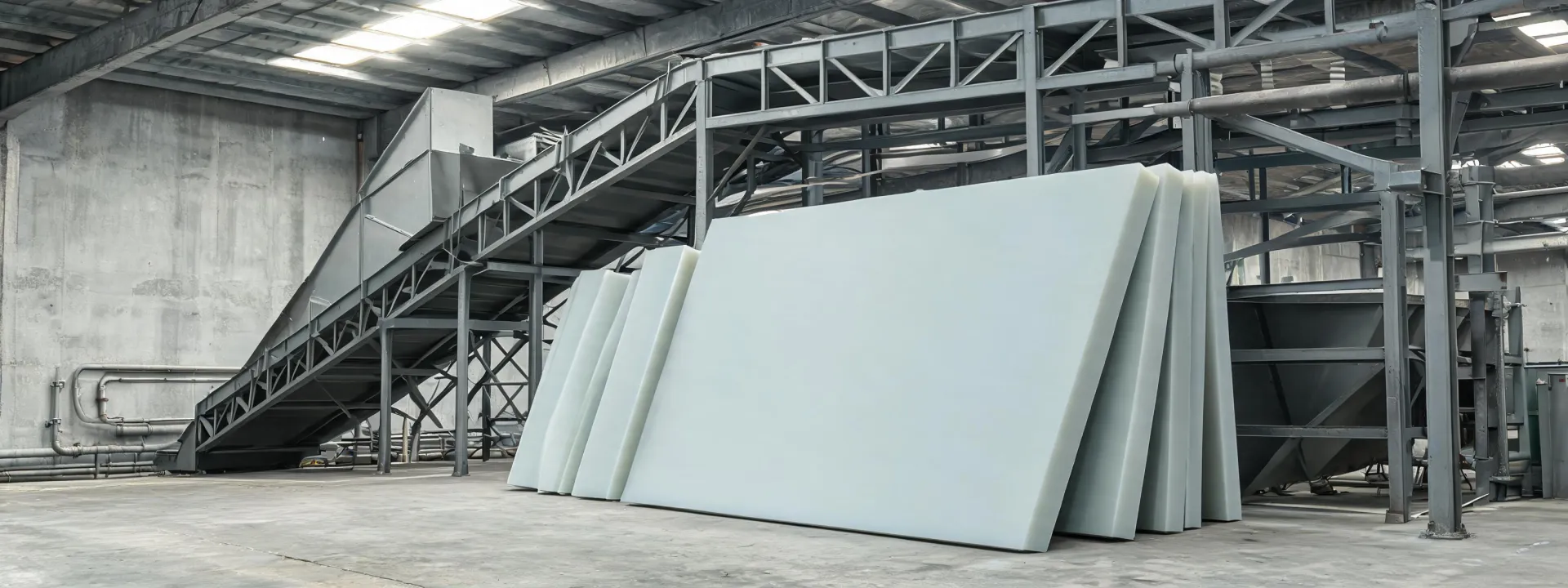
An application names the use and the exposure. It does not pick a density in g/cc or a Shore A target. Those figures still come from the buyer’s drawing or from the factory’s written answer. Assumptions about abrasion life or hydrolysis must be confirmed in writing.
Fixes: belt contact and destination. Still open: Shore A, thickness and whether ester or ether is required.
Fixes: impact duty. Still open: thicker-gauge versus standard-size blanks, and the named ASTM abrasion method.
Fixes: outline from the receiving plant. Still open: cut-to-size allowance and color/finish.
Fixes: sunlight on the duty. Still open: whether a UV-stabilized option is actually quoted, not assumed.
Fixes: hygiene language on the brief. Still open: a named FDA 21 CFR 177 file on the quoted grade, not a company letter.
Fixes: destination cluster and a repeating calendar. Still open: Incoterms, origin of pour or extrusion, and lot documents.
Buyers sometimes treat polyurethane sheets for sale as interchangeable with TPE sheet or with vulcanized rubber plate. Cycle time and recyclability favor TPE / TPU above roughly 15–40 s injection cycles; dynamic wear, tear strength and continuous heat above about 120 °C still favor a crosslinked elastomer. This table is a decision aid, not a published rating set.
| Axis | Thermal | Chemical | Mechanical | Who decides |
|---|---|---|---|---|
| Density | Secondary unless used as a grade split | g/cc if the factory uses it to distinguish foam-adjacent stock | Not a substitute for Shore A | Buyer writes the figure; this site does not reprint one |
| Hardness | Shore A stays on this family | Oil or hydrolysis may force ester versus ether | Tear strength (kN/m) belongs on the named ASTM method | Receiving plant |
| Site condition | Outdoor UV changes the option, not only the price | Wash-down changes the file ask | Impact changes thickness | Application owner, confirmed in writing |
| Process family | TPE may win on cycle time | Vulcanized rubber may win in oil and heat | Cast PU sheet sits between those two stories | Buyer; this desk does not pick the chemistry |
Procurement scenario: a plant asks for polyurethane sheets for sale as chute liners, then discovers one offer is a foam-adjacent density and the other is a solid 90 Shore A plate. Those two lines are not competitors until density, Shore A and thickness are restated.